
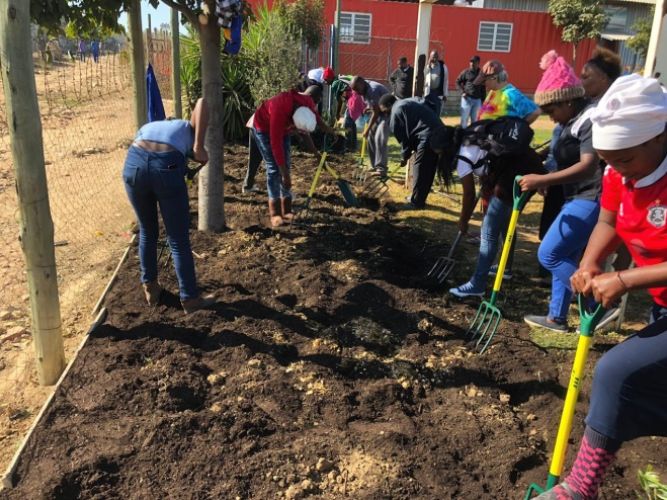
A community farming project set in the heart of Diepsloot, home to more than 400 000 people is set to tackle the issue of food security as well as address the issue of malnutrition that people living in poverty in townships often experience.
From this need, Project Lima came to light, and is increasing yearly to assist the community with the necessary skills and tools to be enable them to cultivate and grow their own vegetables. Project Lima, which means to plant or grow in isiZulu was started by Colin Ekman, managing director of Innovative Contractors his wife Lisa and Pastor Setumo Dlothi, of God’s Will Faith Ministries alongside two pastors from other churches to tackle the issue on how to involve the community in creating their own gardens and provide food security for the community. Recently Lasher tools has come aboard to assist the ambitious food-growing initiative to put a vegetable garden and every home in Diepsloot by providing them with the necessary tools and support to achieve this.
Background: Project Lima
When the project started they sent three pastors to KwaZulu-Natal for a week’s training in vegetable farming and entrepreneurship to enable them to share their knowledge on what they have learnt with the community.
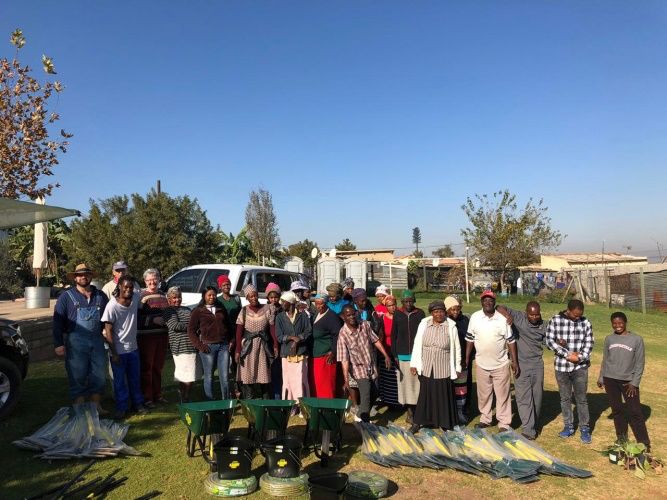
Ekman says the next step was to upskill 55 congregants in the fundamentals of soil preparation and planting, where Lasher donated the necessary tools.
“I have been working with the three Pastors in Diepsloot, namely Pastor Ardmore Mkwesa from United in Christ Ministries, Pastor Freddie Mzila from Holiness Christian Revival Ministries and Pastor Dlothi for over 12 years,” says Ekman, a retired Pastor from Lonehill Village Church.
He added that throughout the years, they have assisted with the crèches and renovated kitchen and classrooms, as well as supplying cooking and eating utensils and stationery.
One of the reasons the project was started was to address the issue that the poor nutritional aspect of children only eating processed food and no vegetables that leads to stunted growth.
“Earlier this year I was approached by Pastor Dlothi stating that he has a problem of people out of work and malnutrition and after meeting with the three Pastors we came up with the strategy to start planting vegetables in Diepsloot for both the individual households and later commercially.”
Cary Goodwin, of Courfill Nurseries donated a substantial number of seedlings and conducted training on planting and plant care.
The two-day training session at Pastor Dlothi’s church where 55 unemployed people from the three churches were trained by ‘Let it Grow’.
Ekman says the training was hands on and very practical.
It taught the congregant how to dig and prepare vegetable beds and how to enrich the soil by adding compost and bone meal.
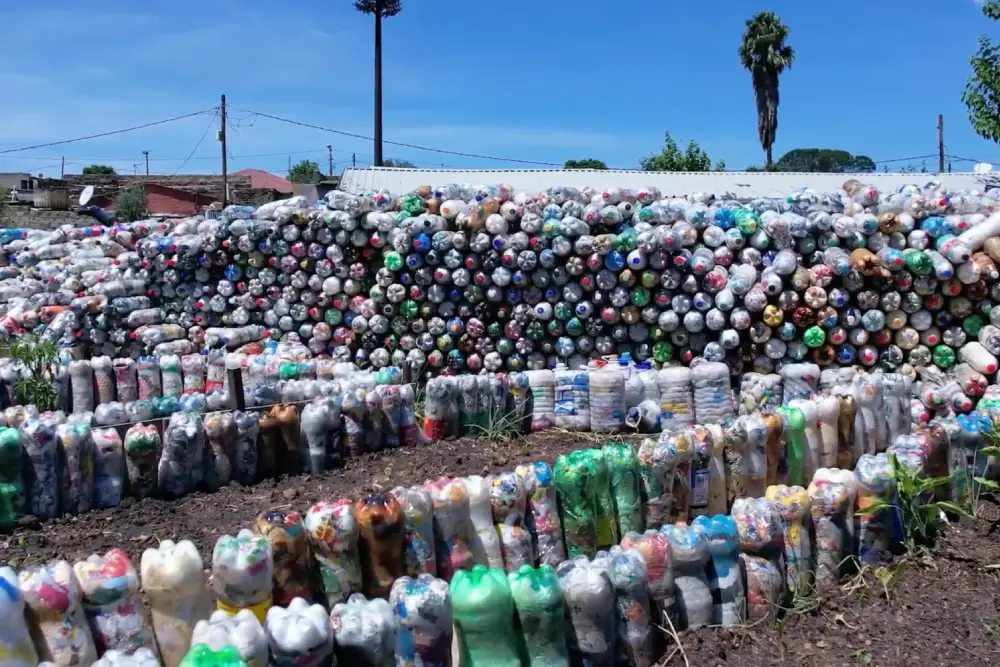
It also taught them how to start a compost bin and how to water the plant with an empty 2l cold drink bottle.
“This was followed up after two weeks allowing the soil to settle with practical planting of seedlings, after which they planted the seedlings in the prepared beds as well as in empty 20l Paint tins.”
Pastor Dlothi said that the vegetables from the vegetable patches are able to around 120 children in the pre-school and other people in need at least once a week.
About 500, 20l buckets have been distributed to the community and the aim is to reach every house in Diepsloot.
The Project
To date the Project Lima Team has prepared vegetable beds and composting bins at three churches in Diepsloot.
The patches at two of the churches are around the size of a door roughly 2m x 1m and they are able to plant a variety of crops to the very hard sandy soil.
“The major problems faced is the soil which is extremely hard and of a poor quality, the limited space in which to grow vegetables as well as rats,” says Ekman.
The patches of land was identified by Ekman and the pastors at the churches with the purpose of using the churches as an example of vegetable farming and a training centre.
At the various patches, they plant a variety of crops which are high in yield and fast growers to allow for a consistent crop. These include: Swiss chard, Kale, Tomatoes, Carrots and Spring Onions which are used as rat deterrents.
According to Ekman they struggle with the usual vegetable pests and use a combination of cooking oil mixed with water as natural method to ward of pests. In addition to pest control, they also use natural compost and chicken manure as fertiliser as well as bone meal to add nutrients to the soil.
The Future
As the project grows and expands a number of people have been trained, they are looking to expand the project to unused agricultural land opposite Diepsloot to grow vegetables based on the United Kingdom allotment system.
The people that were trained will run a commercial farming project and to sell at the craft markets we will be establishing.
In terms of management, the appointed pastords will be taking on the role of captains where they will visit those sites.
In addition to the tools Lasher stated that a bulk stock of compost and seedlings will be established at the churches for distribution, and three captains will be appointed to receive additional training.
The initial recipients of the starter packs will be encouraged to pass on the tools, information and new seedlings to neighbours, who can then start their own gardens.
Project Lima and its partners has planted 5800 vegetable seedlings in Diepsloot.
During the Covid lockdown this provided a lifesaving meal supplement to the poor and the children at the creches.

Get Involved
Get in touch to donate time, resources and skills.
Cherith Projects is a Non-profit Organisation (Registration No. 2021/939657/08).
Donations are tax deductible in South Africa and a tax certificate (Ref. 18A) can be issued.
Bank Details
Cherith Projects
Bank: Nedbank
Account Number:
122 233 6448
Branch: 198765
Swift Code: NEDSZAJJ